So what are nanobubbles?
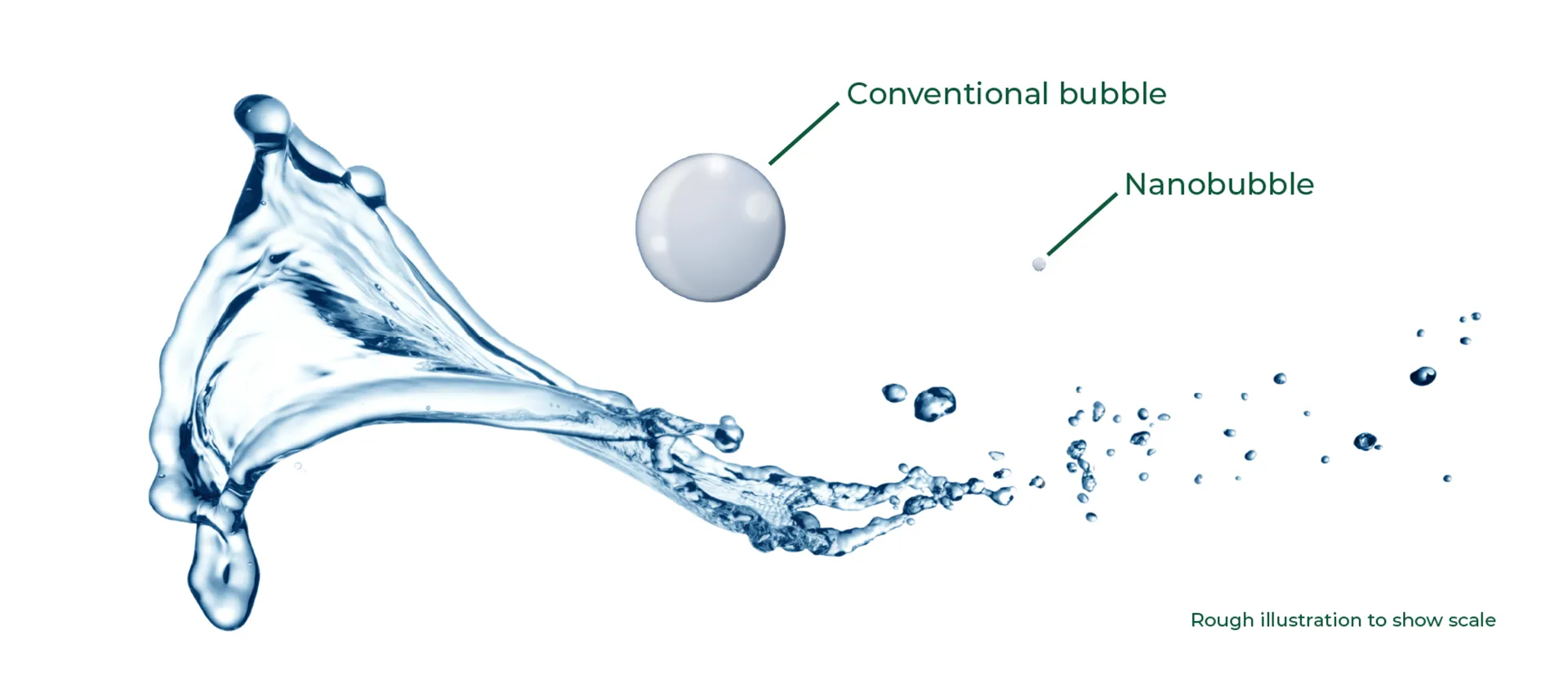
Nanobubbles are extremely tiny gas bubbles, typically less than 200 nanometers in diameter. That’s roughly 2,500 times smaller than a grain of salt, and about 10,000 times smaller than a standard bubble in carbonated water.
As you can imagine, they’re invisible to the naked eye!
Unlike regular bubbles that quickly rise to the surface and burst, nanobubbles carry an electrical charge, meaning they repel each other and remain suspended in water for weeks or even months.
Total Body Fitness
Safe to handle
As the nanobubbles are simply minuscule oxygen bubbles, the same as we inhale each day, they are completely safe to handle and consume.
Highly Effective
Their minuscule size provides an immense surface area per volume, allowing them to transfer oxygen into water with near 100% efficiency
neutrally buoyant
As they're neutrally buoyant, they don't float to the top; instead, they move randomly via Brownian motion, continually mixing gas into the water.
Negatively charged
Nanobubbles carry a negative electrical charged, meaning they continually repel one another, preventing them from merging into larger bubbles
Did you know?
Nanobubbles are substantially smaller than cells and remain suspended in water for extended periods. Their unique physical properties increase dissolved oxygen availability within the drinking water system, supporting a healthier environment for birds and contributing to improved performance outcomes observed in commercial trials.
How are nanobubbles formed?
O2 Agri manufacture specialised systems; Hyper Oxygenation Systems (HOS). We connect these containerised units to your pre-existing water supply with a ‘plug and play’ approach, often installed during a crop turnaround to avoid disruption.
Once installed we’ll provide you with full training so you can understand exactly how to program through our user interface, and tailor your oxygenation levels according to your poultry shed.
Applications for nanobubbles
The applications for nanobubbles are considerable. We’ve seen impressive results within the poultry sector, where increasing the level of dissolved oxygen in the drinking water for broilers has led to considerable increase in yields, decrease in costs, whilst also helping to remove biofilms.
It doesn’t stop there though! We currently have trials running in other agricultural sectors, so if you’d like to discuss how O2 Agri could help you, please do get in touch as we’d love to chat with you.